

You sit in the barber chair and the question comes fast: “Low fade or undercut?” Many men freeze here. Both cuts keep the sides short. Both look sharp. Yet they behave very differently once you leave the shop.
This guide settles the undercut fade vs low fade debate with plain answers. You will learn what each cut is, how they look, how much work they need, and which one suits your face shape and hair type. You will also get a simple script to use with your barber, plus a full FAQ at the end.
Many popular guides mix these terms up or skip important details like grow-out time, hair texture, and women’s versions. This article fills those gaps so you can decide with confidence.
Quick Answer: Undercut Fade vs Low Fade
A low fade blends hair gradually from short to longer, starting low near the ear and neckline. An undercut fade keeps the sides very short, fades them down, and then leaves a clear gap before the longer top. The low fade is softer and more classic. The undercut fade is bolder and has more contrast.
Short version:
- Choose a low fade for a clean, office-friendly, low-risk look.
- Choose an undercut fade for strong contrast, volume on top, and a modern edge.
What Is a Low Fade?
A low fade is a haircut where the sides and back taper from longer hair to very short hair, with the blend starting low on the head. The fade begins just above the ear and follows the natural hairline around the back of the neck. Everything above that point stays longer and flows smoothly into the top.
Barbers use clippers with different guard sizes to create the gradual change. The result is a subtle shift in length, not a dramatic one. Because the fade sits low, most of the sides keep some hair.
How it looks:
- The shortest hair sits around the ears and neckline.
- The blend is smooth, with no visible line or step.
- The sides look tidy but still natural.
- The top can be short, medium, or long.
- It works with a skin fade (down to bare skin) or a shadow fade (a little stubble left).
From the front, a low fade looks understated. From the side, you see a soft gradient that frames the ear. It pairs well with a beard, a side part, a crew cut, or a textured crop.
Why do people choose it?
People pick a low fade because it feels safe and sharp at the same time. Here are the main reasons:
- Professional look. It fits offices, interviews, and formal events.
- Easy to wear. The shape stays neat even on messy days.
- Flexible. You can pair it with almost any top style.
- Forgiving grow-out. A low fade looks fine for a few extra days, so you are not rushing back to the barber.
- Flattering. The subtle blend suits most face shapes and ages.
If you want a haircut that does not shout, the low fade is a strong choice.
Read More:Low Taper Fade for Curly Hair: A Simple Style Guide for Men
What Is an Undercut Fade?
An undercut fade combines two barbering ideas. The undercut means the sides and back are cut much shorter than the top, with no gradual blend into it. The fade means the short sides themselves taper down to skin or very short stubble.
So you get a low-hair zone on the sides that fades smoothly, then a sudden jump to longer hair on top. That jump is what barbers call a disconnection. A traditional undercut has the same short length all around the sides. The fade adds a gradient inside that short zone.
How it looks:
- Very short sides and back, often faded to skin.
- A clear line or “step” where the sides stop and the top begins.
- Longer hair on top, usually 2 to 6 inches or more.
- Strong contrast that makes the top look fuller.
- A bold outline when the top is slicked back, pushed forward, or tied up.
Undercut fades come in low, mid, and high versions. A low undercut fade keeps the short zone small. A high undercut fade takes the short zone up toward the temples and crown, which looks more dramatic.
Why do people choose it?
- High contrast. The cut stands out in photos and in person.
- Volume on top. The short sides make the top look thicker.
- Styling range. Slick back, pompadour, quiff, messy fringe, man bun, or curls all work.
- Cooler summers. Less hair on the sides means less heat.
- Personality. It feels modern, confident, and a little rebellious.
Undercut Fade vs Low Fade Comparison (Simple Table)
Here is the core undercut fade vs low fade comparison in one place.
| Feature | Low Fade | Undercut Fade |
| Blend style | Gradual and smooth from sides to top | Fade on sides, then a sharp disconnect |
| Contrast | Soft to medium | High |
| Fade starting point | Low, near ear and neckline | Low, mid, or high |
| Top length | Short to long | Medium to long works best |
| Look | Classic, clean, polished | Bold, modern, edgy |
| Work or formal use | Excellent | Good, depends on styling |
| Styling time | 2 to 5 minutes | 5 to 10 minutes |
| Barber visits | Every 3 to 4 weeks | Every 2 to 3 weeks |
| Grow-out phase | Easy and gradual | Awkward at weeks 5 to 8 |
| Best for | Safe, versatile style | Statement style |
| Hair types | Most textures | Thick or wavy hair shines |
The biggest difference is the connection. A low fade connects the sides to the top. An undercut fade separates them. Everything else, from styling time to grow-out, follows from that single choice.
Undercut vs Fade vs Taper
Many people use these three words as if they mean the same thing. They do not.
- Taper: A gentle cut where hair gets shorter toward the neckline and around the ears. It keeps some length at the bottom and looks natural.
- Fade: A tighter blend that goes down to skin or very short stubble. It is more dramatic than a taper.
- Undercut: A disconnected cut with short sides and a longer top and no blending between them.
Think of it as a scale. A taper is the softest. A fade is sharper. An undercut is the most contrasty. A low fade sits between the taper and fade in drama, while an undercut fade mixes the fade technique with the undercut structure.
If your barber asks, “Taper or fade?” they are asking how much skin you want to show. If they ask, “Connected or disconnected?” they are asking whether you want an undercut.
High Fade vs Undercut
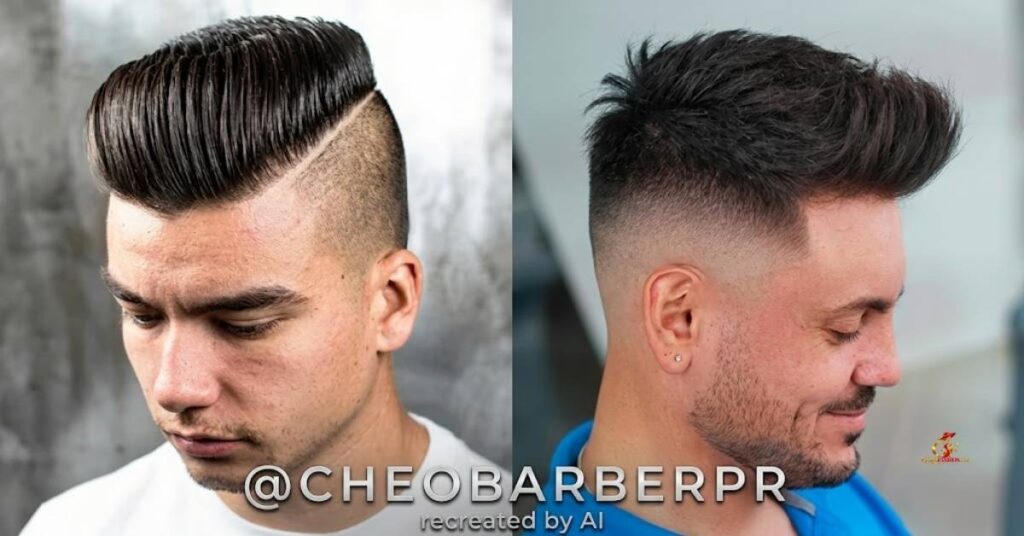
A high fade starts near the temples and takes the sides to skin quickly. It is bold and very short. An undercut is about the disconnection, not the height of the fade.
You can combine both. A high undercut fade gives maximum contrast: bare sides high on the head, then a block of longer hair on top. It looks dramatic and suits strong styling like a slick back or a pompadour.
Compare it with the low fade. A low fade changes less hair, so it reads as gentler. If you are worried about looking too extreme, start with a low version and move up later. Hair grows back, but you cannot glue it on.
Undercut Low Fade Haircut: The Middle Ground
If you cannot choose, there is a hybrid. An undercut low fade uses a low fade on the sides and keeps a mild disconnect from the top.
Here is what it offers:
- The tidy, soft edges of a low fade.
- A little extra contrast from the disconnection.
- A shorter “short zone” that keeps the sides from looking harsh.
- Plenty of top length to style.
This version works well for men who want to stand out a bit without going full barbershop trend. It also grows out better than a high undercut fade because less hair is removed.
Ask for a “low fade with a disconnected top” or “low undercut fade.” Use a photo to avoid confusion, since words vary from barber to barber.
Face Shape Guide
The right haircut balances your face. Use this guide as a starting point, then adjust to your taste.
Round Face:
A round face has soft angles and similar width and length. You want height and sharper lines.
- An undercut fade is usually the better pick. The short sides slim the face, and a tall top adds length.
- Try a quiff or textured top with a mid fade.
- Avoid very long sides, which add width.
Square Face:
A square face has a strong jaw and a straight forehead. Both cuts work here because the face already has structure.
- A low fade keeps the look polished and softens nothing too much.
- An undercut fade adds edge if you like a sharper style.
- A textured crop or side part looks great.
Oval Face:
An oval face is balanced and flexible. Almost anything works.
- Pick either cut based on lifestyle, not face shape.
- A low fade with a classic side part is a safe winner.
- An undercut fade with a slick back looks confident.
Heart or Diamond Face:
These faces are wider at the forehead or cheekbones and narrower at the chin.
- A low fade with a textured fringe softens a wide forehead.
- Avoid extreme height on top, which can exaggerate the narrow chin.
- If you prefer an undercut, keep the top at medium length and style it forward.
Long/Rectangular Face:
A long face needs less height and more width.
- A low fade with a medium top works best.
- Skip a tall pompadour. It makes the face look longer.
- If you choose an undercut fade, keep the top flatter and add side texture.
Hair Type Guide
Face shape matters, but hair type decides how the haircut behaves day to day. Use this section as your “hair type comparison.”
Straight Hair
Straight hair shows every line, so the fade must be clean. Both cuts look sharp.
- A low fade gives a neat, classic finish.
- An undercut fade looks striking with a slick back or side part.
- Use a matte cream or light pomade for control.
Wavy Hair
Wavy hair has natural movement, which adds volume on top.
- An undercut fade shows off the waves.
- A low fade keeps things softer and easier to style.
- Sea salt spray adds texture without weight.
Curly Hair
Curly hair looks fantastic with a fade, because the short sides frame the curls.
- A low fade is great if you want curls to stay the focus and the shape stay tidy.
- An undercut fade gives dramatic contrast with a curly top.
- Keep the curls moisturized so they stay defined.
Thick Hair
Thick hair can feel heavy and hot. Both cuts remove bulk.
- An undercut fade is excellent for thick hair, since it cuts weight where it counts.
- A low fade works if you want to keep more length overall.
- Use hair clay for strong hold.
Thin or Fine Hair
Fine hair can look flat. Contrast adds the illusion of fullness.
- A low fade with a short textured top is a safe pick.
- An undercut fade can make the top look thicker, but only if the top has enough length.
- Avoid heavy products. Use a light matte cream or powder.
Medium Hair vs Long Hair
- Medium hair (2 to 4 inches): Undercut fade medium hair is a popular combo. It lets you style a quiff, comb over, or textured sweep.
- Long hair (5 inches or more): An undercut fade with long hair works for slick backs, man buns, and ponytails. A low fade with long hair gives a softer, more natural look.
Undercut Fade for Women
Women choose these cuts too. The ideas are the same, but the styling is different.
What Is an Undercut Female Haircut?
An undercut female haircut means one or more sections of hair are cut very short, often at the nape, sides, or underneath. The rest of the hair stays long. When the short section is faded, you get an undercut fade for women.
Common versions include:
- A hidden undercut at the nape, only visible when hair is up.
- A side undercut with a shaved design.
- A full faded undercut on both sides with a long top.
Undercut Fade Long Hair
Women with long hair can wear an undercut fade as a hidden detail. When hair is down, no one notices. When it is up in a bun, the faded section shows. This gives flexibility for work and play.
How to Choose for Women
- A low fade is gentler and easier to grow out.
- An undercut fade is bolder and gives more contrast.
- Ask for a smaller section if you are trying it for the first time.
Styling Products and Techniques
Good products make both cuts look better. Here is a simple guide.
- Pomade: Gives shine and strong hold. Best for slick backs and classic looks.
- Hair wax: Medium hold with some flexibility. Good for textured styles.
- Hair clay: Matte finish and strong hold. Great for thick hair.
- Matte cream: Light hold with a natural look. Best for low fade styles.
- Sea salt spray: Adds grit and volume. Works well on fine or wavy hair.
How to style in four steps:
- Towel dry your hair until slightly damp.
- Apply a pea-sized amount of product to your palms.
- Work it through from back to front.
- Shape with a comb or fingers, then finish with a light spray if needed.
An undercut fade often takes a bit longer because you style the top to create a clean shape. A low fade usually needs only a quick comb.
Maintenance and Barber Visits
Upkeep is where these cuts truly differ.
Low Fade Maintenance
- Visit your barber every 3 to 4 weeks.
- The fade grows out gently, so it still looks neat after a month.
- Daily care is minimal. Wash, dry, and style.
Undercut Fade Maintenance
- Visit your barber every 2 to 3 weeks.
- The disconnection is obvious when the sides grow out.
- Expect more frequent cleanups at the neckline and ears.
The Grow-Out Phase
Grow-out matters if you want to change styles later.
- Low fade: Easy. After 4 to 6 weeks, the fade softens and blends into a natural taper.
- Undercut fade: Harder. At weeks 5 to 8, the sides can look puffy and uneven until they match the top.
If you plan to grow your hair long, a low fade is the smoother path. If you plan to keep trimming, the undercut fade is fine.
Cost Over Time
More barber visits mean higher cost. An undercut fade can add up over a year, so factor that into your decision.
How to Ask Your Barber
Communication saves bad haircuts. Use this simple script.
For a low fade: “I would like a low fade, starting just above the ear. Keep the top at about 3 inches and blend it smoothly.”
For an undercut fade: “I would like an undercut with a low (or mid) fade on the sides. Keep the top long and disconnected.”
Tips:
- Bring a photo from your phone.
- Say whether you want a skin fade or a shadow fade.
- Mention how you style your hair every morning.
- Ask the barber what works with your hair texture.
A skilled barber will guide you. Do not be shy about asking questions.
Which Is Better: Undercut Fade or Low Fade?
Neither wins in every case. The better choice depends on your goals.
Choose a low fade if you:
- Work in a conservative or corporate setting.
- I want an easy, low-maintenance routine.
- Plan to grow your hair out later.
- Prefer a subtle look.
Choose an undercut fade if you:
- I want bold contrast and a modern style.
- Have thick or wavy hair with good length.
- Enjoy styling your hair.
- Do not mind frequent barber visits.
If you are unsure, start with the low fade or the undercut low fade. It is the safest way to test a more dramatic style.
Common Mistakes to Avoid
- Asking for the wrong term. Say “disconnected” if you want an undercut.
- Choosing the fade height by trend alone. Match it to your face shape.
- Skipping product. Even a simple cut needs a little finish.
- Ignoring hair texture. Curly and fine hair need different care.
- Waiting too long between cuts. Fades lose sharpness quickly.
Frequently Asked Questions
Which is better, undercut fade or low fade?
A low fade is better for a clean, versatile look. An undercut fade is better for bold contrast and volume on top.
What is the difference between low fade and undercut fade?
A low fade blends smoothly into the top. An undercut fade leaves a sharp gap between short sides and a longer top.
Is undercut fade better than low fade for professional settings?
A low fade is usually safer for formal workplaces. An undercut fade can work if you style the top neatly.
Which haircut is easier to maintain?
The low fade is easier. It grows out gently and needs fewer barber visits.
Does an undercut fade work for curly hair?
Yes. The short sides frame the curls and make the top look fuller.
Which cut is best for a round face?
An undercut fade often works best because it adds height and slims the sides.
Can I get a low fade with long hair?
Yes. A low fade with long hair gives a soft blend and a natural, polished finish.
What is an undercut female haircut?
It is a cut where sections, often at the nape or sides, are shaved short while the rest stays long.
How often should I get a low fade or undercut fade trimmed?
Get a low fade trimmed every 3 to 4 weeks and an undercut fade every 2 to 3 weeks.
Is a low fade the same as a taper?
No. A taper keeps more length at the bottom, while a low fade goes shorter, often to skin.
What is the best haircut for low maintenance styling?
A low fade with a short or medium top is the easiest to maintain.
Can women get an undercut fade?
Yes. Many women choose a faded undercut at the nape or sides, which can stay hidden under long hair.
Final Thoughts
The undercut fade vs low fade choice comes down to contrast and effort. A low fade gives a soft, polished, and easy look that fits almost any setting. An undercut fade gives a bold, modern, high-contrast look that rewards a little styling and regular trims.
Start with your face shape, then think about your hair type, your daily routine, and how often you want to see your barber. If you want a safe path, go with a low fade. If you want a statement, pick an undercut fade. If you want both, try the undercut low fade and adjust from there.
Bring a photo, use the right terms, and trust a skilled barber. Whichever cut you choose, you will leave the chair looking sharp.
Noah Daniel Davis is a passionate fashion writer with experience in fashion trends, styling, beauty, and lifestyle. He enjoys creating simple, practical content that helps readers discover new styles and express their individuality with confidence.
