

A low taper fade is a haircut where the hair on the sides and back gets gradually shorter, but only near the sideburns and the neckline. The top keeps its length. The result looks clean, subtle and easy to wear every day.
If you have never had a fade before, this is the safest place to start. It does not look dramatic, it fits most workplaces, and it grows out without an awkward stage. This low taper fade haircut guide explains what the cut is, how it differs from similar cuts, who it suits, how to ask for it, how to style it and what it costs.
Barber websites do not always agree on the exact terms, and some use “low taper” and “low taper fade” as the same cut. This guide uses the most common barbershop meaning.
What Is a Low Taper Fade?
A low taper fade is a men’s haircut that blends the hair from short to longer in a small area, mainly around the sideburns and the back of the neck. The blend starts low, just above the ears, and the sides stay fuller than they would with a mid or high fade.
Here is the quick version for anyone skimming:
- Where it sits: around the ears, sideburns and neckline
- How short it goes: from a very short length at the bottom (often a zero or a #0.5 guard) up into the longer hair
- What stays long: the top and most of the sides
- Overall effect: soft, neat and low contrast
Think of it as a polished version of a classic short back and sides. The edges look sharp, but the shape still looks natural.
What Does “Taper” Mean?
A taper means the hair gradually gets shorter as it moves toward the hairline. The change is smooth, not sudden. A traditional taper leaves some hair at the bottom edge. A fade, on the other hand, usually goes down to skin or close to it.
This cut combines both ideas. You get the gradual shaping of a taper with the clean finish of a fade, but only in a small zone. That is why barbers often call it the gentle option.
Low Taper Fade Types and Variations
The basic cut stays the same, but the top, the hair texture and the finishing details change the look a lot. These are the variations people search for most.
Low Taper Fade Black Male
This cut works well for Black men with waves, short curls, twists, a high top or a short natural cut. The fade stays low, so the shape of the head and the natural hairline stay in focus.
Many men pair it with a crisp line-up (also called an edge-up or shape-up) along the forehead and temples. Tell your barber if you want the line-up soft and natural or sharp and defined. If you are growing waves, ask for a taper that does not cut too high into the wave pattern.
Read More:Undercut Fade vs Low Fade: Which Haircut Fits You Best?
Low Taper Fade Curly Hair
Curly hair is one of the best matches for this cut. Removing bulk at the edges keeps the curls tidy, while the top stays full and defined. Ask your barber to leave enough length on top for the curls to form, usually two to four inches depending on your curl pattern.
Use a curl cream or a light leave-in product on damp hair, and avoid brushing dry curls. That keeps the shape clean.
Mid Taper Fade
A mid taper fade starts higher, around the temples. It shows more contrast than a low taper and needs more frequent touch-ups. It suits men who want a sharper, more noticeable shape. If you are unsure, start low. A barber can always take the blend higher next time, but you cannot put hair back.
Modern Low Taper Fade
The modern version focuses on softer blends instead of hard lines, and the neckline is often left natural. It pairs well with textured crops, French crops, fringes and loose, messy tops.
Low Fade
A low fade also starts low, but the shortest band is larger and more visible. It has more contrast than a low taper. We compare the two below.
Low Taper Fade Straight Hair
Straight hair shows every line, so this cut looks especially neat on it. Side parts, quiffs, textured fringes and short crops all work. Because straight hair can look flat, a little matte clay or sea salt spray adds texture and body.
Low Taper Fade V
In a V-shaped finish, the hair at the back is tapered to a V at the nape instead of a straight or rounded edge. This can look sharp from behind and works well with a natural neckline. Ask your barber if a V suits the way your hair grows at the back, because cowlicks and thick growth patterns change the result.
Low Taper Fade with Beard
This is one of the cleanest combinations in men’s grooming. The taper at the sideburns flows straight into the beard, so there is no harsh break between hair and facial hair. Ask your barber to connect the sideburn taper to the beard line smoothly. A trimmed beard with this cut looks tidy and balanced.
Difference Between Low Taper Fade, Low Fade, and Taper Fade
This is the part that confuses most beginners. The names sound similar, but the cuts are not identical. Here is a simple comparison.
| Feature | Low Taper Fade | Low Fade | Taper Fade |
| Where it starts | Just above the ears and neckline | Low on the sides and back | Varies (low, mid or high) |
| Contrast | Low and subtle | Medium | Depends on height |
| Skin visible | Very little | A visible low band | Often more |
| Upkeep | Every 2 to 4 weeks | Every 2 to 3 weeks | Every 2 weeks or less if high |
| Best for | Beginners, offices | Men who want more edge | Men who want a clear fade |
Low Taper Fade
This is the most conservative choice. It is limited to the edges, so most of the side hair stays. It looks professional and relaxed at the same time.
Low Fade
A low fade covers a bigger area near the bottom of the head. It looks bolder, more defined and more youthful. It also shows growth sooner, so you will need touch-ups slightly more often.
Taper Fade
“Taper fade” is a broader term. It describes a taper that fades, and it can be low, mid or high. If you only say “taper fade” to a barber, you leave the height up to them. That can end in a cut that is higher than you wanted. Always add the word “low.”
Why the Low Taper Fade Is a Smart Choice
There are good reasons this cut keeps showing up in barbershops. It is practical, and it looks good on many men.
Clean Appearance
The tidy neckline and sideburns make your head look sharper. Even if the top is messy, the edges keep the whole haircut looking neat.
Professional Look
It has low contrast, so it is accepted in most offices, schools and formal settings. You get a modern haircut without drawing too much attention.
Easy to Maintain
Since only the edges are short, daily styling takes a few minutes. You do not need complicated tools or a long routine.
Grows Out Nicely
A high fade can look messy within a week. It grows out gradually, so you can wait a little longer between appointments without looking untidy.
Who Should Get a Low Taper Fade?
Most men can wear this cut. It works best for people who want a clean haircut with minimal commitment. Here is how it fits different features.
Hair types and textures
- Straight hair: looks sharp and structured with a little texture product
- Wavy hair: keeps natural movement while staying neat
- Curly hair: controls bulk at the sides and keeps curls defined on top
- Thick hair: removes weight around the ears and neck
- Thin hair: keeps the sides fuller than a high fade, which helps avoid a see-through look
Face shapes
- Oval: almost any top style works
- Round: add height on top, such as a quiff, to lengthen the face
- Square: a softer top, like a textured fringe, balances a strong jaw
When in doubt, bring a reference photo and let your barber check your growth pattern.
Best Low Taper Fade Styles for Beginners
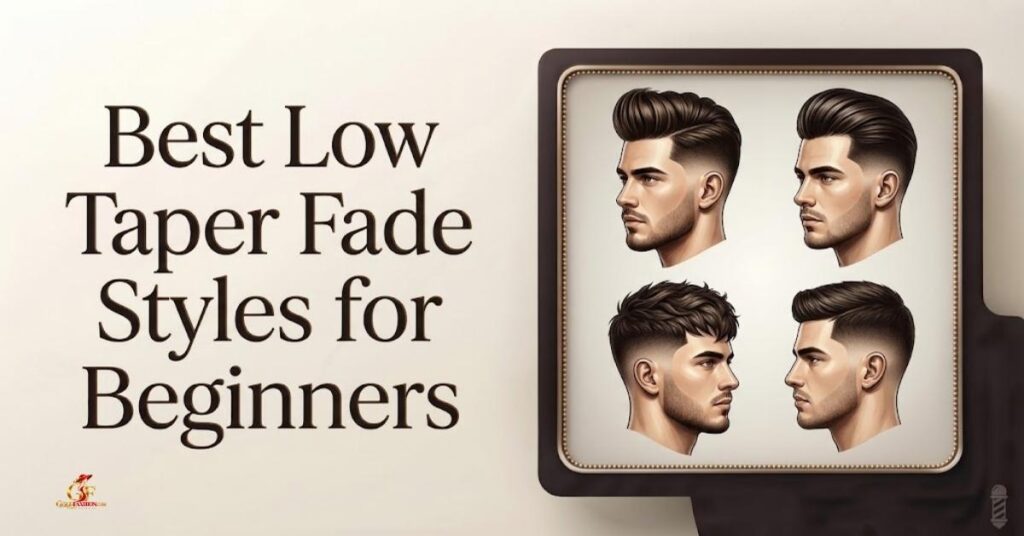
If this is your first time, choose a top style that is simple to manage. These low taper fade styles for men are friendly options.
- Short textured crop: a short top with natural texture. Quick to style and very low effort.
- Classic side part: a neat, professional look that works for offices.
- Textured fringe: hair brushed forward with a relaxed finish. Great for fine to medium hair.
- Quiff: more volume at the front. A little more styling, but it looks confident.
- Natural curls on top: let the curls do the work with a curl cream.
- Slick back: a refined look with a light pomade and a comb.
Start with the first or second option if you feel unsure. You can always change the top later without changing the taper.
How to Ask Your Barber
Knowing the name of the cut is useful. Explaining the details is what gets you the right result. Many barbers say that the biggest haircut mistakes come from vague requests.
Here is how to ask for a low taper fade in five steps.
- Say the full name. Ask for a “low taper fade,” not just a “taper” or a “fade.”
- Describe the placement. Say you want it kept low, around the sideburns and neckline.
- Choose the finish. Tell them if you want it taken to skin, or only to a short guard number such as a #0.5 or #1. A softer finish is easier for beginners.
- Explain the top. Give a length in inches or describe the style, for example “keep two inches on top with texture.”
- Mention the neckline. Say whether you want a natural neckline, a tapered one or a squared one.
You can also use this simple script:
“I would like a low taper fade, kept low around the ears and neckline. Soft blend, nothing dramatic. Leave the sides fuller above the ears and keep about two inches on top.”
Always bring photos from different angles. A reference photo removes guesswork, because “low” means slightly different things to different barbers. If you are not sure, begin lower. A cut can go higher next time, but it cannot go back down.
How to Style a Low Taper Fade
Styling is the easy part. The top does most of the work, and the taper stays clean on its own. Here is a simple routine.
- Wash and towel dry. Leave the hair slightly damp for most products.
- Pick the right product. Use a small amount, about the size of a pea or a coin.
- Work it through. Rub it between your palms, then run it through your hair from the roots to the ends.
- Shape the hair. Use your fingers or a comb for a side part, quiff or crop.
- Set it. Use a light hairspray or sea salt spray if you want extra hold.
Keep the sides free from heavy products. The taper should look clean and not shiny.
Product Guide
| Product | Best For | Finish |
| Matte clay | Textured crops and fringes | Matte, strong hold |
| Styling cream | Natural, soft looks | Light hold, natural |
| Pomade | Side parts and slick backs | Shine, medium to strong hold |
| Sea salt spray | Wavy and messy tops | Matte, tousled |
| Curl cream | Curly hair | Defined, soft curls |
| Light mousse | Fluffy volume | Light, airy hold |
For fine or thin hair, choose lightweight products so the hair does not look heavy. For thick or coarse hair, a clay or paste gives control. Avoid shiny gels on a fringe because they can clump the strands together.
How to Maintain a Low Taper Fade Properly
Good upkeep keeps the shape neat for longer. Low taper fade maintenance is simple if you follow a few habits.
How often should you get it touched up? Most men visit the barber every two to four weeks. The cut looks sharpest in the first week or so and stays presentable for around three weeks. If you like a very crisp neckline, go closer to two weeks. If you prefer a softer look, four weeks is fine.
Daily and weekly habits
- Wash your hair regularly with a gentle shampoo.
- Use conditioner if your hair is dry, curly or coarse.
- Brush or comb the top to keep it tidy.
- Avoid cutting the edges yourself. It is easy to create uneven lines.
- Keep the neckline clean between visits by asking your barber for a quick neck clean-up if needed.
Beard care
If you have a beard, trim it often and keep the line near the sideburns tidy. A beard that grows out of shape will hide the taper and spoil the connection.
Common Beginner Mistakes
Avoid these errors to get the cut you want the first time.
- Saying only “taper fade.” This leaves the height open. Say “low” every time.
- Not bringing a photo. Words can be misunderstood. A picture cannot.
- Starting too high. Beginners should go low and move higher later if they want more contrast.
- Ignoring hair texture. A cut that looks great on straight hair may need changes for curly or coily hair.
- Using heavy product on the sides. It makes the taper look greasy and hides the blend.
- Waiting too long between cuts. Even a gentle taper loses its shape after a month or two.
- Skipping the neckline conversation. A squared neckline and a natural one look very different.
Cost of a Low Taper Fade
Prices depend on the city, the barber’s experience and whether you add services. Looking at public booking listings, many barbershops list a fade or taper somewhere around $30 to $60 in the United States, while many UK listings sit roughly between £15 and £28. Premium shops can charge more, and some cities are much higher.
What can change the price:
- Location: big cities and upscale areas cost more.
- Barber experience: senior barbers charge more than junior ones.
- Add-ons: a beard trim, line-up, hot towel or eyebrow clean-up adds to the bill.
- Time: a precise fade takes longer than a basic trim.
At one cut every three weeks, expect about 17 visits a year, so ask about packages for regular clients.
FAQs
What is a low taper fade haircut?
It is a haircut where the hair gets gradually shorter only around the sideburns and neckline, while the sides and top stay longer. It looks clean and subtle.
Is a low taper fade good for beginners?
Yes. It has low contrast, a soft blend and a gentle grow out, so it is the safest first fade.
How do I ask a barber for a low taper fade?
Say “low taper fade, kept low around the ears and neckline,” then describe your top length and show a reference photo.
What is the difference between a low taper fade and a low fade?
A low taper fade only shapes the edges, while a low fade covers a larger band with more contrast.
How do I style a low taper fade haircut?
Apply a small amount of matte clay, cream or pomade to damp hair, shape the top and keep the sides product free.
How often should you maintain a low taper fade?
Get a touch-up every two to four weeks to keep the edges sharp.
Is a low taper fade good for curly hair?
Yes. It reduces bulk at the sides while keeping the curls on top full and defined.
Does a low taper fade suit every face shape?
It suits most face shapes. Choose the top style to balance your face, such as height for round faces or a fringe for square faces.
How much does a low taper fade cost?
Prices vary by city and barber, but many shops charge roughly $30 to $60 in the US and £15 to £28 in the UK.
How long does a low taper fade last?
It stays neat for about two to four weeks, and the grow out is gradual.
Can I get a low taper fade with a beard?
Yes. Ask your barber to blend the sideburn taper into the beard line for a smooth, tidy connection.
Conclusion
This cut is a smart choice for anyone who wants a clean, modern haircut without a bold look. It is subtle, professional, easy to style and grows out well. Whether you have curls, waves, straight hair or a beard, you can adjust the top and the finish to match your style.
To get it right, use the full name, say where you want it placed, bring a reference photo and describe your top. Then keep up with a simple routine and book your next visit every two to four weeks. If you are new to fades, this is the best place to begin.

Noah Daniel Davis is a passionate fashion writer with experience in fashion trends, styling, beauty, and lifestyle. He enjoys creating simple, practical content that helps readers discover new styles and express their individuality with confidence.
